
Fillings, Crowns & Bridges in Arlington
Have you spotted a cavity or other damage to your teeth? Has your dentist recommended root canal therapy? If so, you may be wondering about your options for restorative dental services. Restorations include custom-made tooth crowns, bridges, and fillings. Each option can help you regain your smile while preserving your dental health.
What is a Dental Filling?
When cavities cause part of a tooth to become damaged, a dentist will likely recommend a filling. During a tooth filling procedure, the dentist clears away decay from the affected tooth and fills the hole with a durable material. Some common filling materials include composite resin, porcelain, and gold. If you have questions about the procedure or the tooth filling cost, please contact our practice.
Fillings are a common procedure to repair tooth fractures or decay. With advanced filling materials and skilled dentists, you can enjoy a renewed, cavity-free smile and excellent oral health at Virginia Dental Center.
Dental fillings involve removing decay from a tooth and restoring it with filling material that mimics the look and function of a natural tooth. Fillings serve two purposes; restoring a decayed tooth and preventing decay from growing.
Many different materials can be used in fillings. The one you select will depend on your situation and goals. The following list includes all the different materials that can be used for your filling and their general information
Gold
- Can last over 20 years
- Easy on gum tissue
- Higher price range
Amalgam (silver)
- Resist wear
- Fairly inexpensive
- More noticeable
Composite (plastic)
- Match tooth color
- Can last up to 10 years
- Susceptible to stains
Porcelain
- Match tooth color
- Resist staining
- Higher price range
Benefits of fillings
- Repair cracked, chipped, or decayed teeth
- Lighten stained teeth
- Change the shape of teeth
- Close gaps between teeth
Are Tooth Crowns and Dental Bridges Effective?
Removable only by your dentist, tooth crowns and bridges are bonded to the teeth using dental cement. While crowns act as dental caps for structurally damaged teeth, a bridge is a replacement for one or more missing teeth. A tooth bridge is constructed using one or more pontic teeth attached to supportive natural teeth or dental implants.
What Dentist Provides Tooth Fillings, Crowns, and Bridges?
If you believe restorative treatment is necessary, the best place to start is with your general dentist. At our practice, we will assess your smile and determine whether you are a good candidate for a tooth crown, bridge, or fillings. Give us a call today to learn more about our services.
What Will a Tooth Filling, Tooth Crown, or Dental Bridge Cost?
Many patients have questions about cost when restorations are necessary. In most cases, your insurance coverage, the complexity of your case, and the type of appliance selected will determine your out-of-pocket expenses. Learn more about the bridge, filling, or dental crown cost by giving us a call.
How Many Varieties of Dental Fillings Are There?
Dentists utilize several materials to fill decayed teeth, including glass, composite resin, porcelain, or gold. During your visit, one of our dentists will discuss your options and the benefits of each type. You’ll also have the opportunity to review the cost of a filling and your payment options.
Dental crowns replace the structure, function, and esthetics of a damaged tooth
Dental crowns are an effective solution for:
- Decayed or weakened teeth
- Broken or worn-down teeth
- Misshapen or discolored teeth
- Covering dental implants
- Enhancing your smile
- Holding a dental bridge in place
If you find that you’re facing any of these challenges, we can help! With skilled professionals and advanced technology, dental crowns are a reliable method of getting the smile you’ve always wanted.
What are dental crowns?
Dental crowns are essentially a cap that is designed to mimic the look and function of a natural tooth. They are placed on the visible part of the tooth that is above the gum line. Crowns can be stainless steel, all metal, porcelain-fused-to-metal, all resin, or all ceramic. The type of material that is used largely depends on your goals for your crown.
What Are the Different Types of Tooth Crowns?
Several types of materials are used to construct dental crowns. If the crown will be placed in the front of the mouth, your dentist may recommend porcelain. Unlike metal, porcelain can be colored to match your natural teeth. For back molars, gold alloy or porcelain can be durable options. Your dentist will help you decide what type of crown is best for you.
What Are the Steps for Getting Crowns for Teeth?
Placing a crown usually is a multi-step process. During your first visit, the dentist will examine your teeth and re-shape the affected tooth. This creates space for the crown, which will eventually “cap” the tooth. Impressions will also be taken of the tooth to ensure an excellent fit. A temporary crown will be placed to protect the tooth while the new device is fabricated. Then, you’ll visit our office in approximately two weeks for a final crown fitting and adjustment.
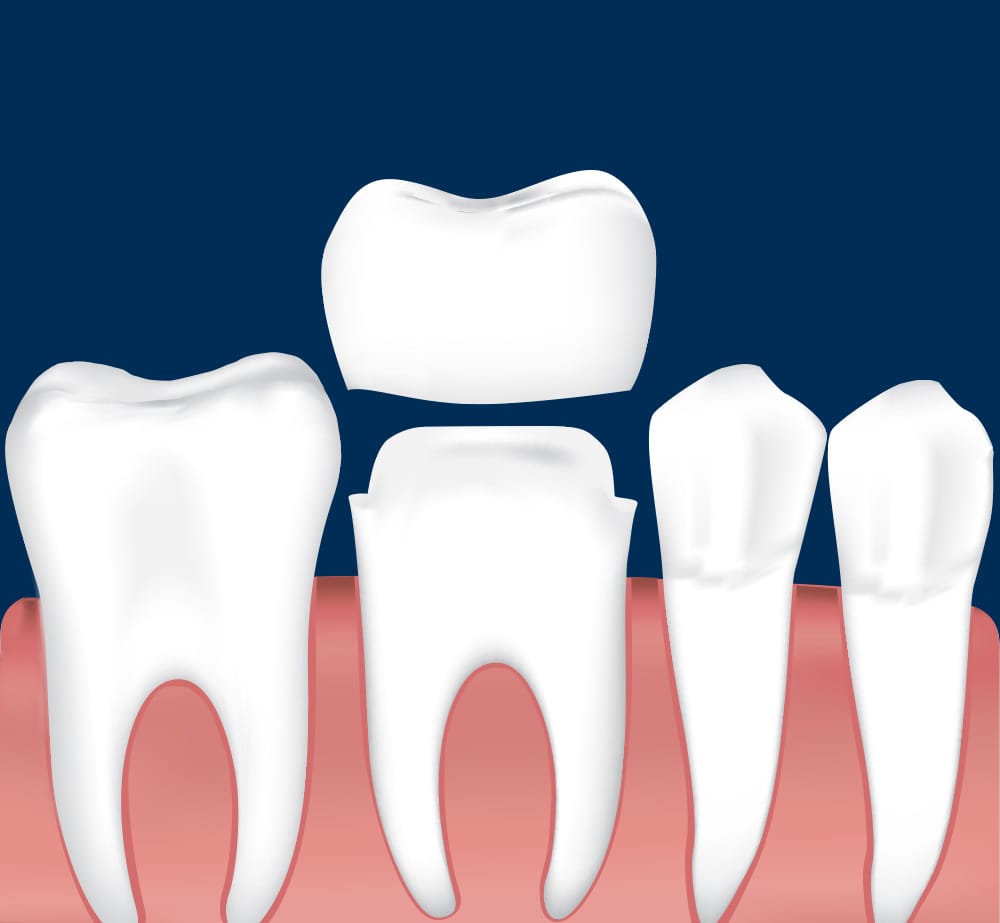
First visit:
- Your dentist examines your oral health, checking your tooth roots and bone
- The tooth is reshaped to make room for the crown
- Your dentist will make an impression of the tooth to design the crown
- A temporary crown is placed to protect the prepared tooth until the permanent crown is ready
Second visit:
- The temporary crown is removed
- The permanent crown is fitted and adjusted
- Once everything is in place, the permanent crown is cemented into place
Benefits of crowns:
- Protect teeth from further damage
- Restore the look and function of a natural tooth
- When cared for properly, crowns can last for 15 years
Dental Bridges in Arlington, Virginia. An effective alternative to a healthy smile through cosmetic dentistry.
Do you suffer from missing teeth? Dental bridges are an effective solution to replace missing teeth and restore the appearance and function of your mouth. Dental bridges are true to their name, in that they literally bridge the gap created by absent teeth.
How do dental bridges work?
A bridge consists of natural teeth or implants on either side of the gap that acts as the bridge's anchors. These anchor teeth are referred to as abutment teeth and serve as the support for the false tooth that is placed in between them. The false tooth is called the pontic and can be made from gold, porcelain, or a combination of the two.
Advantages of dental bridges:
- Can be less expensive than implants
- Effectively restore the function of missing teeth
- Mimic the look and feel of natural teeth
- With the proper care, they can last over a decade
- Revive your smile
How Many Types of Tooth Bridges Are There?
The most common type of bridge is a traditional bridge, which is effective for patients missing one or more teeth. With this type of bridge, the pontic teeth are supported by two crowns, which are placed over healthy adjacent teeth. The crowns can also be placed over dental implants. Another type of bridge is the cantilever bridge. This style is used when the patient does not have healthy teeth on one side of the bridge. To create this bridge, the dentist adds a pontic on the outside of the supporting teeth instead of the inside.
What Happens During the Tooth Bridge Procedure?
When receiving a bridge, the first step is re-contouring the abutment teeth. This allows the supportive crowns to fit snugly. Measurements and impressions will also be taken of the affected area, which serves as the model for the new bridge. The dentist will then place a temporary bridge to protect the area while the new bridge is being created. At a second appointment, the dentist will cement the final appliance and ensure it fits properly.
To begin fitting a dental bridge, your dentist will prepare crowns that will fit over your anchor (abutment) teeth. Preparation can include contouring to make sure the crowns fit securely over the teeth.
Next, impressions are taken to help design your permanent bridge. In the meantime, your dentist may give you a temporary bridge. This bridge is removed during your next visit when your permanent one is placed and adjusted.
Ready to book an appointment?
Book a consultation today or make an appointment using our convenient online appointment scheduler.
Book appointment

Enjoy the flexibility of paying through monthly payments.
CareCredit is a healthcare credit card designed for your health and wellness.
Learn more

A discount plan available to keep you and your family healthy.
Everyone is accepted and membership can include coverage for your family.
Learn more